
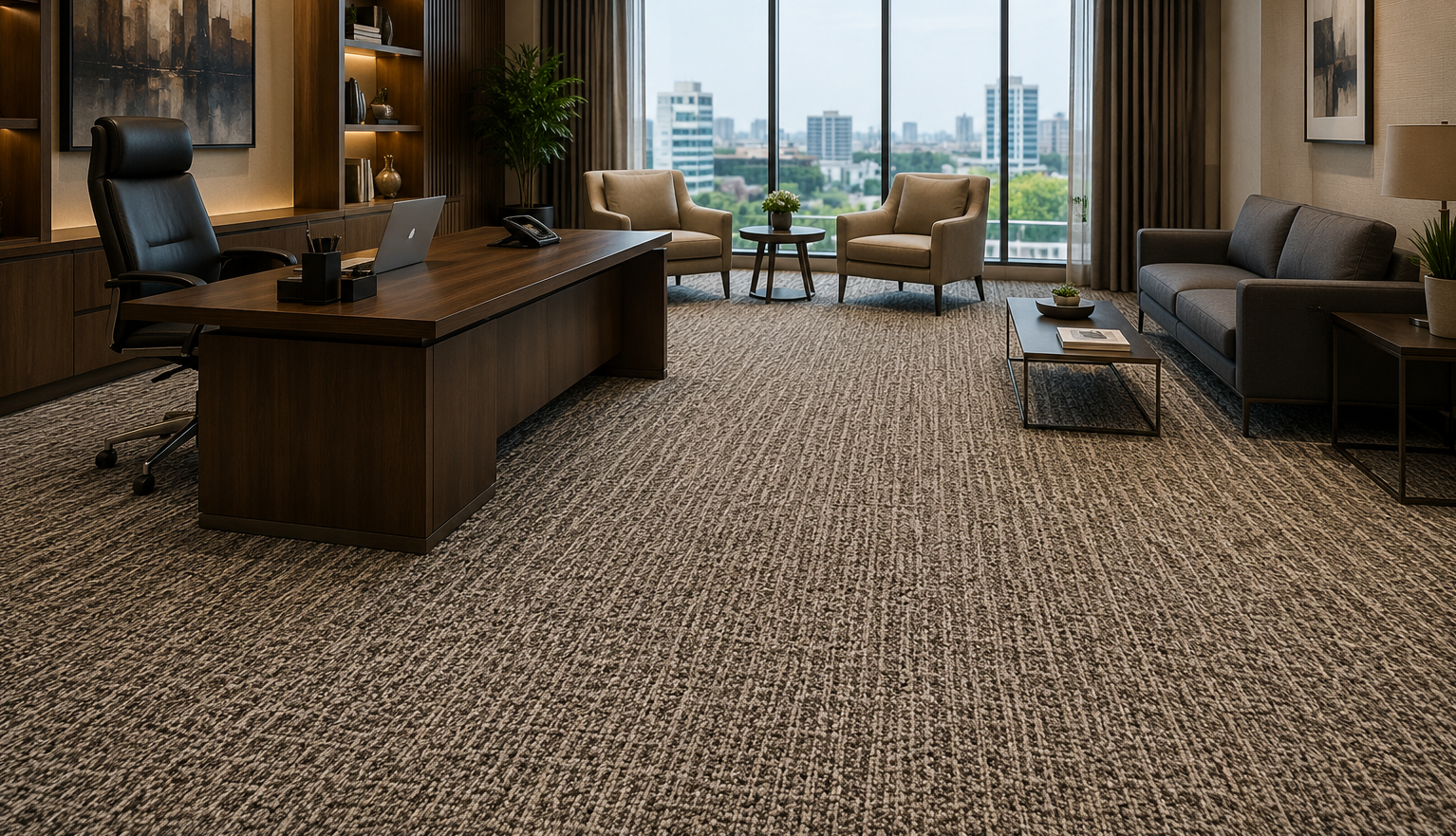
A Wool Carpet can bring warmth, visual depth, and a premium finish to commercial interiors, but selecting one for a business project requires more than choosing an attractive colour. Procurement managers need to consider construction, expected traffic, maintenance requirements, installation conditions, and lifecycle value before finalising a specification.
For commercial projects in Nagpur, Maharashtra, these considerations become particularly relevant for hotels, executive offices, meeting areas, premium retail spaces, clubs, and other interiors where appearance and long-term usability need to work together.
Why Wool Is Used in Commercial Carpet Applications
Wool is a natural fibre valued for its characteristic texture and appearance. Its fibres have natural resilience, which can help a suitable carpet recover from compression caused by normal foot traffic.
However, the word “wool” alone does not tell a procurement team whether a carpet is right for a particular project. Two wool carpets can perform differently depending on their construction, pile density, backing, manufacturing quality, and intended application.
That is why specification should begin with the space rather than the material name.
Match the Carpet to the Traffic Level
An executive cabin and a hotel corridor place very different demands on flooring.
Before selecting a wool carpet, define:
- Expected daily foot traffic
- Type of footwear commonly used
- Furniture movement
- Cleaning frequency
- Risk of food or beverage spills
- Requirement for acoustic comfort
- Desired interior appearance
A product intended primarily for a low-traffic decorative space should not automatically be selected for a heavily used passage simply because the surface looks suitable.
Consider Construction Along With Fibre
Procurement teams often focus first on fibre composition, colour, and price. Construction deserves equal attention.
Pile height, pile density, yarn structure, backing, and overall carpet build can influence how the flooring feels and behaves in actual use.
Samples are particularly useful when multiple options appear similar in photographs. A physical sample allows the project team to evaluate texture, shade, pile character, and compatibility with furniture and wall finishes.
For larger projects in Nagpur and other Maharashtra markets, confirming specifications before bulk procurement can also reduce the risk of receiving material that does not match the intended design.
Maintenance Planning Should Start Before Installation
Commercial flooring performs better when maintenance requirements are understood from the beginning.
Ask how routine vacuuming should be handled, what type of spot-cleaning procedure is appropriate, and whether the facility team needs any specific care instructions.
Entrance areas also deserve attention because outside dust can be carried deeper into a building. A planned cleaning programme can help manage visible soil before it becomes concentrated in frequently used zones.
Think About Colour Practically
Colour selection is not purely an interior-design decision.
Very light shades may make certain marks more noticeable, while extremely dark colours can sometimes highlight lint or dust. Mid-tone colours, textured effects, and patterns may be practical where visual appearance needs to remain consistent under regular commercial use.
The final choice should still complement the overall interior concept.
Request Project-Relevant Information
When evaluating a supplier or manufacturer, procurement teams should request information relevant to the actual project instead of relying on a generic catalogue.
Useful questions include:
- What is the carpet construction?
- What is the fibre composition?
- Which commercial applications is it intended for?
- What backing is supplied?
- What sizes or formats are available?
- Can samples be reviewed before ordering?
- What installation preparation is recommended?
- What are the cleaning and maintenance considerations?
Panipat Carpets works with carpet and interior flooring requirements for buyers serving markets including Nagpur. For B2B procurement, clear communication about application, quantity, dimensions, and expected use can make product evaluation considerably more efficient.
A wool carpet should ultimately be selected as part of the complete interior specification rather than as an isolated decorative purchase. When procurement teams evaluate traffic, construction, maintenance, aesthetics, and installation together, they are better positioned to choose flooring that suits both the design brief and the practical demands of the property.