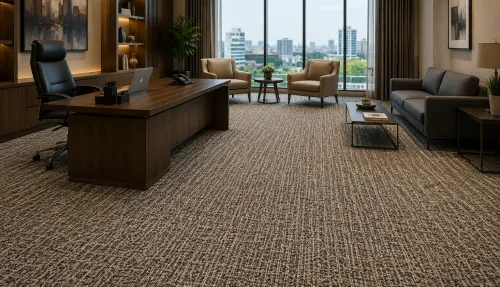
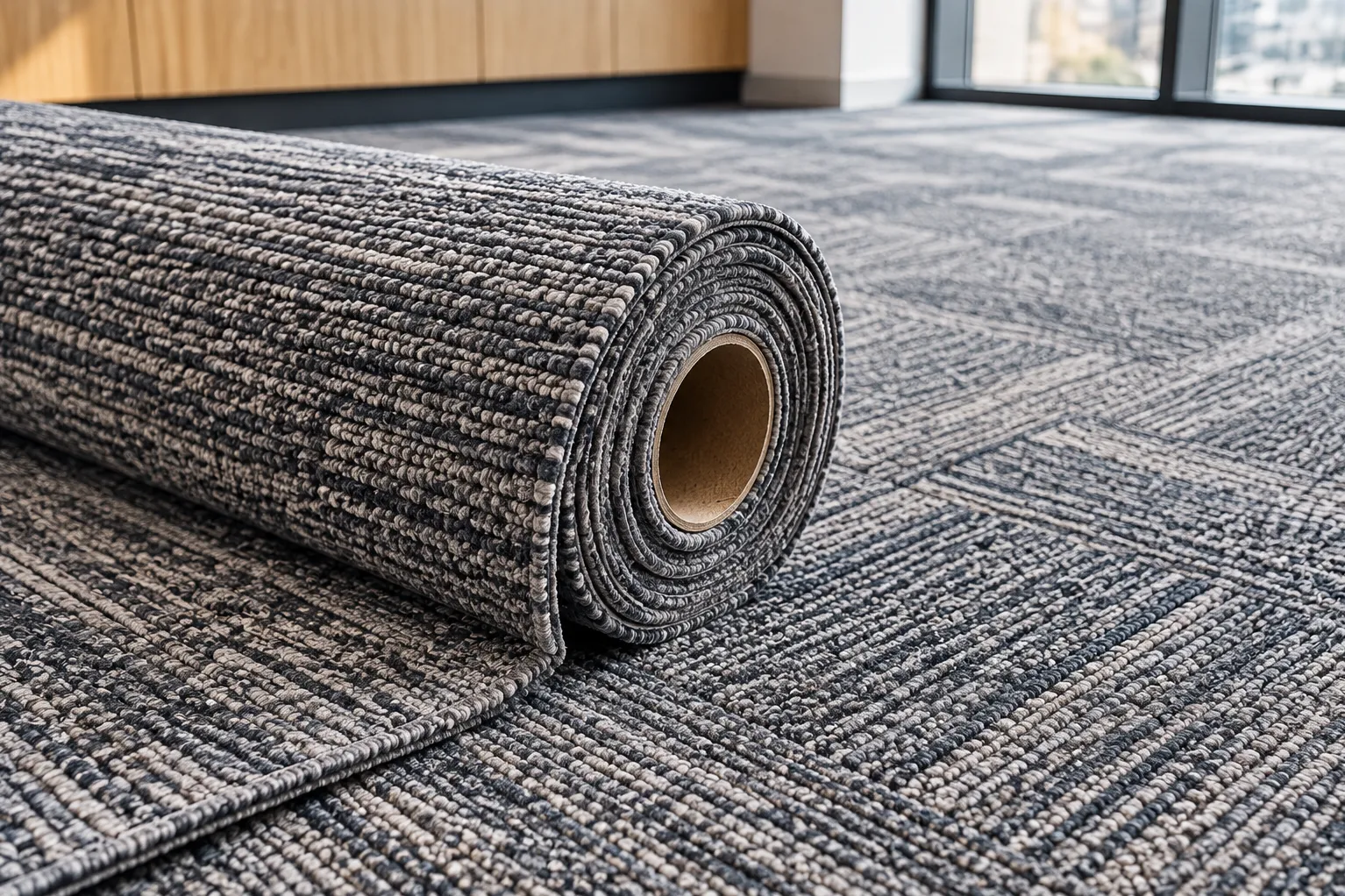
Choosing between a Synthetic Carpet and a natural-fibre alternative is rarely a matter of declaring one category universally better. The useful question is which material and construction best fit the project's traffic, maintenance, appearance, budget, and operational requirements.
For commercial procurement teams in Nagpur, Maharashtra, this comparison can affect offices, hospitality developments, retail interiors, institutional spaces, and renovation projects.
Begin With Performance Requirements
Natural and synthetic fibres have different characteristics, but fibre composition should not be evaluated in isolation.
Carpet performance also depends on construction, pile structure, backing, density, installation, and maintenance.
Before comparing materials, document what the flooring needs to do.
For example, is the priority:
- Handling frequent foot traffic?
- Creating a premium tactile appearance?
- Simplifying routine maintenance?
- Meeting a particular design palette?
- Managing a defined project budget?
- Covering a large commercial area?
- Coordinating with phased installation?
Once these priorities are clear, material comparisons become more meaningful.
Synthetic Carpet Offers Broad Specification Possibilities
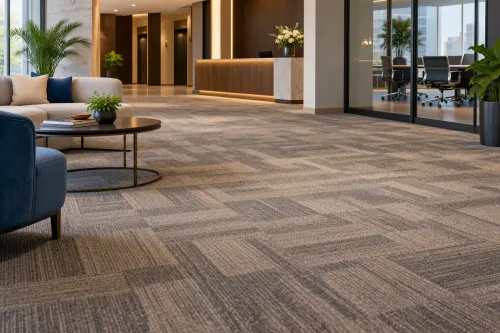
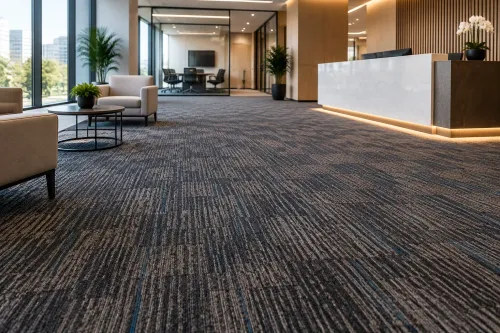
Synthetic carpet can be manufactured using fibres such as nylon and polyester, among others.
Different synthetic fibres and constructions can offer different combinations of texture, colour, resilience, maintenance characteristics, and price.
For large projects, synthetic options may provide procurement teams with considerable flexibility when coordinating appearance and commercial requirements.
However, the category is broad. A buyer should still verify exactly what is being offered rather than approving material based only on the word “synthetic.”
Natural Carpet Has Its Own Design Appeal
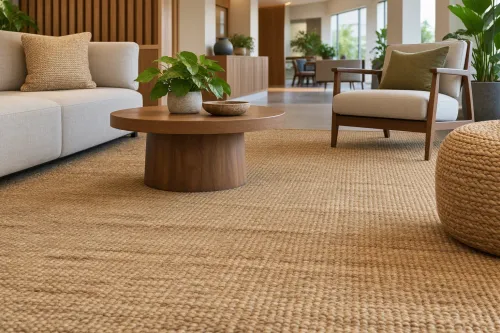
Natural fibres may be selected for their texture, tactile character, and material story.
They can work particularly well where the design brief prioritises an organic or premium interior atmosphere. At the same time, cleaning procedures, environmental conditions, and application suitability need careful consideration.
This is why material selection should involve both the design team and the people responsible for operating the property.
Compare Lifecycle Requirements, Not Just Purchase Price
A procurement comparison becomes incomplete when it stops at the quotation.
Look at the broader picture:
Initial cost: Material, transport, floor preparation, accessories, and installation.
Maintenance: Routine cleaning procedures, equipment, and periodic specialist care where required.
Application: Whether the proposed carpet construction is suitable for expected traffic.
Replacement: Ease of replacing damaged or worn areas and implications for matching existing flooring.
Operational disruption: How installation or future replacement may affect an occupied property.
The least expensive initial specification does not necessarily represent the most suitable commercial decision.
Ask Suppliers for Comparable Information
When collecting quotations, use the same project brief for each supplier.
Provide dimensions, quantity, application, expected traffic, location, preferred colour range, and project timeline.
Then request comparable product details.
This reduces the chance of comparing two quotations based on substantially different carpet constructions.
For Nagpur projects, logistics and delivery scheduling should also be discussed early, particularly when carpet installation must align with furniture, ceilings, electrical work, painting, or other finishing activities.
Samples Help Resolve the Final Decision
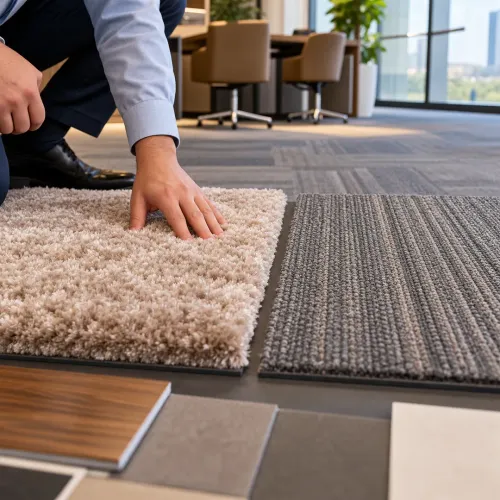
Once the technical shortlist has been created, samples can help the interior team evaluate colour, pile, texture, and overall finish.
Review samples under actual project lighting where possible.
Panipat Carpets works with commercial buyers evaluating carpet requirements across Nagpur and other regional markets. Giving the manufacturer a clear specification allows product discussions to focus on appropriate options instead of broad catalogue recommendations.
Ultimately, Synthetic Carpet and natural carpet should be compared at product level rather than category level. The right decision comes from aligning fibre, construction, maintenance, visual requirements, budget, and usage conditions with the realities of the project.
Keywords